Our News

Liwei Group Co.,Ltd.

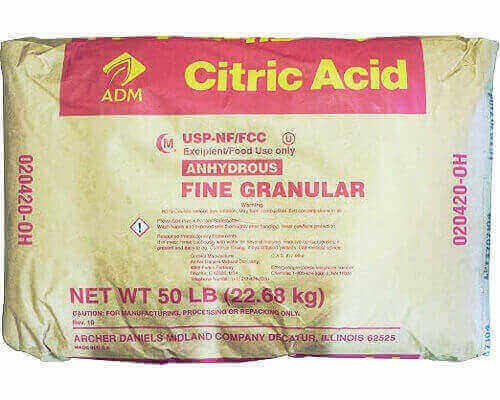
ADM Citric Acid: Premium Citric Acid & Citrates for Nutritional Supplements

Working in chemical manufacturing for decades teaches one lesson above all others: dependability underpins product quality. ADM’s approach to citric acid and citrate production reflects that learning curve. In modern supplement manufacturing lines, every batch demands the same tight range of purity and solubility as the last, or the entire process faces disruption. Achieving this does not begin and end on a truck loading dock—it demands strict batch monitoring all the way from inbound raw material through finished packaging. Each lot carries quality documents traced to the original fermenters, with every result tied back to real-world microbial cultures, not just spreadsheets. Years spent collaborating with nutrition formulators make it clear: if a batch deviates in acid strength, moisture, or trace contaminant levels, blending schedules unravel and production windows close. Sites like ours run multiple QCs each shift, not as an afterthought, but as insurance—because supplement makers cannot afford project delays triggered by lost confidence in a key acidulant or buffer.Every supplement format, from effervescent tablets to encapsulated powders, exposes the finicky nature of food-grade ingredients. Citrates and citric acid do more than add a tart note—these minerals and acidulants play critical roles as pH regulators and chelating agents. Small inconsistencies in profile don’t just shift the taste, they can affect nutrient stability, color, and shelf life. As a direct producer, we notice patterns customers rarely see from a distance. For instance, trace metallic residues or uncontrolled particle size can create caking in high-speed blending lines or introduce off-flavors that even adept flavorists struggle to mask. Our teams spent years optimizing crystallization and drying conditions not only for appearance, but for stable, reproducible flow—critical for continuous mixing of multi-active formulations. Whenever we review a batch that meets grade, it reflects investment in line maintenance, air control, and water purification after every cycle. A robust HACCP plan and allergen monitoring do not just appear on a checklist; they’re embedded into daily routines, shaped by the high standards of dietary supplement brands around the world.Kenneling a high-quality ingredient means never losing sight of its journey. At our sites, every bag of citric acid carries a fingerprint of the microbial fermentation conditions that yielded it, the downstream purification steps, and the packaging environment. Rapid response to any supply chain issue depends on having a clear paper trail, so that any recall or quality challenge can be addressed in hours, not weeks. Years spent supplying demanding supplement brands have shaped our approach—no engineer or plant manager shrugs off a blip in process parameters. For example, an undiagnosed spike in residual sulfur content can jeopardize a sensitive effervescent vitamin line. By maintaining archived samples and detailed electronic logs, plant teams can troubleshoot and offer root-cause fixes without repeatedly disrupting schedules. Nutritional product launches hinge on the assumption that every lot of citric ingredient stands up to label claims and regulatory audits. Direct communication with supplement makers feeds back into ongoing process improvements—when someone discovers a haze issue or granule stratification in a new blend, we’ll send technical support to test run real-world equipment with off-the-line samples, and bring the learnings straight back to the plant floor.Industry customers lean harder into free-from claims and simplified ingredient lists, and this creates a new challenge for chemical manufacturers: removing traditional processing aids and extraneous residues while delivering performance. Driven by non-GMO, allergen-free responsible sourcing, the production of nutritional citrates and citric acid shifted to rely on strictly controlled fermentation and trace-purity reagents. Our manufacturing flowcharts reflect these shifts with explicit ingredient segregation, thorough line flushes, and third-party certifications stamped on outgoing documentation. No one in manufacturing ignores the growing demand for analytical transparency—batch certificates now detail micro and heavy metal results because so many supplement projects live and die by those details. The process engineering staff must react whenever local regulations or retailer requirements switch; change does not wait for a new financial quarter. Working directly with product developers, we’ve fielded requests for custom particle sizes, dust suppression, and rinse-off characteristics tailored to tableting or capsule operations, even pilot runs to confirm uniform ingredient dispersal in final packaging. This flexibility often determines whether a customer succeeds with a next-generation blend while avoiding stability issues and cGMP headaches down the road.In every production issue sits an opportunity to fix and upgrade the entire value chain. When customers report precipitation in a new magnesium citrate formulation, we run side-by-side tests to isolate the contaminant or pinpoint an ionic mismatch. Improved reactor cleanout procedures and targeted in-process sampling catch contaminants before product ever reaches shipping. Maintaining decades-long partnerships with upstream fermentation supply partners allows us to demand consistent feedstocks and screen for genetic drift in microbial starters—factors that can quietly ruin a batch quality. By hosting collaborative technical audits and sharing best practices, we sharpen the edge of our overall operation each year. Local responsiveness counts most: plants prepare backup inventory and practice surge runs, so global supplement launches do not falter during peak demand periods or supply disruptions. The manufacturing reality is not just about meeting CoA numbers, but ensuring every pound of citric acid or citrate helps supplement brands realize formulations that live up to their marketing, retail partners’ demands, and—most importantly—the expectations of the final consumer.

June 24, 2026
Liwei Group Co.,Ltd.

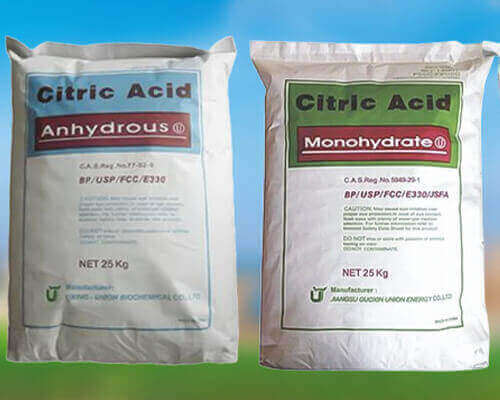
Union Citric Acid: Cost-Effective Citric Acid for Home & Industrial Cleaning

At our manufacturing plant, citric acid doesn't just pour from the lines without careful thinking and hard work. Years ago, we started with a tight crew and a vision to create a cleaner, more affordable alternative for both home and industrial cleaning. Our production starts upstream, with time spent verifying the quality of raw materials and deciding on fermentation conditions that consistently yield citric acid with strong cleaning action. Mold strains grow in massive steel vessels, monitored every hour to make sure temperature, pH, and nutrient balance drive the reaction to completion. After separation and purification, the white crystalline powder forms the base for detergents, descalers, and multipurpose sprays found on the shelf and in janitorial carts. The process doesn't just happen by automation; technicians regularly sample product streams and calibrate equipment, catching any deviation before it can affect purity. Each staff member knows that a single off-spec batch can mean wasted time and energy for cleaning professionals and families alike.Costs get a lot of attention on the factory floor, not just in the accounting office. Using efficient fermenters and recycling energy from the exothermic reaction lets us keep expenses down. These cost savings don't disappear into shareholder pockets; they unlock more value for customers, from the homemaker scrubbing limescale on a kettle to facilities managers battling soap scum and rust in high-traffic washrooms. Large-scale runs mean we can buy raw materials in bulk, which keeps prices stable even when outside markets bounce unpredictably. The choice to use locally sourced corn or cassava cuts transport and storage costs, which adds up over truckloads and months. As labor is a major expense, we invest in operator training and reliable control systems, which means we rarely shut down for unplanned repair. Every decision in the plant has one eye on the final cost of each kilogram, not just for now but for the years ahead.Every shift at the plant, we're reminded who relies on our work. Inside homes, citric acid lifts stubborn mineral deposits from coffee machines, leaves glassware spotless, and breaks down animal fats on oven racks. At larger scale, janitors and facility techs mix our product into solution tanks for scrubbing public bathrooms, kitchens, and hospital floors. Beyond easy limescale removal, our technical team tests formulations daily to make sure the acid doesn't corrode metals or leave harmful residues after rinsing—real-world problems we've solved by refining both process control and final product quality. We track feedback from cleaning professionals who tell us which dilutions work best on pool tiles, kitchen surfaces, and grout. Whether sold under a global brand or as bulk powder to blending companies, this material ends up as the cleaning power behind spray bottles and buckets everywhere.Rising consumer awareness demands more than low cost and strong cleaning performance. Many traditional cleaning chemicals raise issues, especially in tightly ventilated spaces or near food-preparation areas; they can irritate skin, leave harsh residues, or harm aquatic ecosystems. Our manufacturing team runs additional testing to confirm that citric acid, at the concentrations used for cleaning, presents fewer environmental and health risks, provided users follow labelling. Reviews from both industry labs and environmental agencies point to citric acid breaking down quickly in wastewater, reducing burdens on water treatment plants. Parents worried about toddlers in the kitchen and workers with chemical sensitivities tell us that switching to citric acid-based cleaners has eased day-to-day concerns. These stories and findings drive research in our labs, where we look for ways to further reduce byproduct formation and plastic packaging without raising prices.Producing citric acid at competitive scale brings daily headaches. Raw material supply disruptions—drought in a corn-growing region, fuel price spikes, regulatory changes—can all threaten stable output. Our technical management regularly overhauls equipment schedules and builds redundancy into sourcing, sometimes storing extra feedstock ahead of anticipated supply crunches. Energy costs, especially for heating and aerating fermenters, often fluctuate, so we review consumption line by line every month. Maintenance is another hidden challenge; every conveyor, separator, and crystallizer must be checked for leaks and fouling, with parts swapped before a breakdown interrupts the entire line. Success comes from predictable output and product quality across shipping containers season after season. These practices allow us to lock prices for long-term buyers, shielding them from cost surges that ripple through the cleaning supply chain.Over the last decade, market pressure has moved away from single-use, high-impact chemicals toward greener options that don't sacrifice cleaning power. Feedback from janitorial companies and facility managers showed us that reliable results at a good price mattered more than exotic formulations. During each product review, we check for emerging cleaning needs—the growing popularity of ultrasonic cleaners, high-efficiency dishwashers, and automated floor scrubbers means new standards for dissolution and residue. Increasingly, clients seek certifications and evidence for both sustainability and workplace safety, pushing us to participate in independent audits and share verified testing data. We work closely with global partners to adapt packaging for easier recycling and compatibility with automated filling systems, keeping our product relevant in an industry that values both performance and stewardship.As a manufacturer, reliability builds our reputation far beyond what can be printed on a label or ad. Users in homes and industries return after a year, or ten, on the strength of experience: kettles cleaned, scum wiped away, operating costs calculated and met. Citric acid continues to win new converts—bleach alternatives for allergy-conscious families, eco-friendly industrial cleaning crews, food-safe descaling for equipment—each relying on product made at our facility under careful eyes. By staying close to the ground, growing with our partners, and listening to real needs, we continue making citric acid an accessible, cost-effective ally in the larger quest for cleanliness and peace of mind.

June 24, 2026

Liwei Group Co.,Ltd.

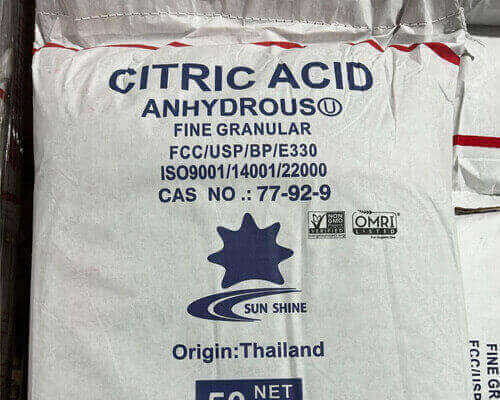
Sunshine Citric Acid: Chelating & Descaling Citric Acid for Industrial Water Treatment

Through decades of manufacturing citric acid, we’ve seen industrial water treatment become more demanding as industries scale and environmental goals rise. Scale, rust, and mineral build-up clog pipes, foul heat exchangers, and slow productivity in utilities, cooling towers, and food factories. Here, citric acid stands out—not just for its strong chelating power, but because operators and environmental managers trust it to pull metals like calcium and iron out of recirculating and feedwater systems. This reliability doesn’t only improve flow and protect metal surfaces from damaging deposits, it cuts down on pump wear, unplanned shutdowns, and excess cleaning cycles. Mistreating scale often brings harsh acids or phosphates with regulatory headaches and risk; citric acid, by contrast, is considered safer to handle, biodegradable, and less likely to trigger corrosion outside its working range. Hearing maintenance crews say that lines flush clear, equipment lasts longer, and inspection costs drop affirms why factories choose it year after year. In practice, regular descaling with citric acid also helps facilities optimize chemical and water usage, stay inside discharge limits, and satisfy internal sustainability scorecards, which carry real weight in today’s procurement and reporting cycles.Consistency matters in chemical treatment. A water utility manager might not say so directly, but any change in a citric acid batch’s purity or granulation turns into performance swings or, worse, fouling. Our own pilot plant runs have shown how even a fractional bump in trace metal content sometimes distorts chelation curves—a headache for those recalibrating dosing pumps and monitoring on-line sensors. Reliable manufacturing, strict quality control, and transparency in impurity profiles isn’t just a paperwork item; it determines whether a 3-day shutdown becomes a 5-day one or whether product loss affects the monthly bottom line. Process industries often push for lower dust and faster dissolving forms to keep dosing accurate, minimize operator exposure, and avoid blockages in feeders. Stories come back from the field: a plant that had never tried citric acid in its closed-loop system reported scale reduction after just a few maintenance cycles, but only after learning to flush properly and monitor pH. What worked for them rested on trial, standardized input quality, and commitment to training—an investment made worthwhile by the reduced frequency of acid cleaning and fewer mechanical interventions.It’s not lost on us that environmental regulations around water discharge force a close look at treatment chemistry. Citric acid checks important boxes because its breakdown products are environmentally benign and don’t accumulate in ecosystems the way some alternative chemicals do. A power plant in a coastal region, pushed by local discharge permits, switched from synthetic chelators: they documented easier compliance, better biodegradability, and improved public perception. These results repeat across industries, especially where effluent limits for heavy metals and persistent chemicals grow ever tighter. We’ve found that providing clear sourcing and traceability—something manufacturers can do better than intermediaries—bolsters confidence among customers and regulators alike. Meeting ISO and REACH standards, supplying complete analysis certificates, and conducting periodic audits of production help keep users aligned with changing rules. Whenever research emerges around micro-contaminant migration or aquatic toxicity, our technical and compliance teams evaluate if adjustments to process controls or sourcing are warranted, because what enters a water system today may affect audit scores or even licensing tomorrow.Manufacturers of all stripes face pressure to lower carbon emissions, meet recycling targets, and minimize hazardous chemical inventories. We participate in these moves by offering citric acid grades with traceable, renewable sourcing, and by continuously shrinking our own plant’s energy footprint through heat recovery and water reuse systems. Lab partnerships and pilot projects reveal a clear interest in “greener” scale control chemistries. Customers seek to simplify MSDS handling, lessen operator hazard exposure, and show measurable improvements for ESG reporting. We don’t view citric acid as an all-purpose miracle—it’s not the best fit for all water chemistries nor a blanket substitute for every hard acid—but years in the field prove its fit in situations where food-safety, worker protection, or wastewater-friendly status carry extra weight. Direct engagement with plant managers and maintenance engineers helps manufacturers like us adapt formulation blends for site-specific requirements, always keeping in mind reliability of supply and minimizing overall system disruption.Industrial water users want to solve stubborn scale problems without backsliding on safety or discharge limits. From the factory floor, manufacturing high-purity citric acid goes beyond supplying a basic ingredient—it’s about helping partners cut the number of process corrections, keep systems running longer, and maintain clean bill of health in compliance checks. As water scarcity and discharge management tighten worldwide, those who adopt straightforward, proven, and well-documented chemicals often end up with lower life cycle treatment costs, fewer surprise repairs, and an easier time proving compliance year after year. Hearing from users who once cycled through harsh alternatives—and now rely on citric acid’s calculated dose and environmental strengths—motivates ongoing improvements to our processes. True progress in water treatment demands attention to plant realities, regulatory targets, and open channels between manufacturer and user. Manufacturing citric acid for industrial water treatment isn’t just a business; it plays into the wider industrial movement toward safer, more sustainable operations across sectors.

June 24, 2026

Liwei Group Co.,Ltd.

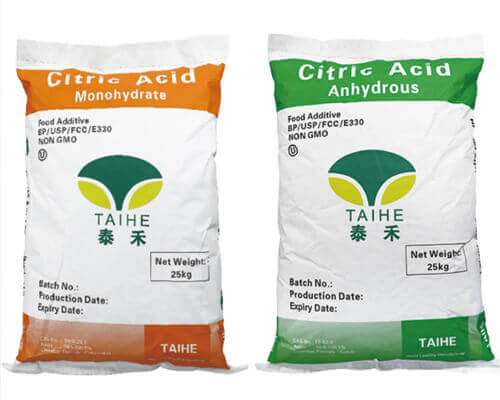
TAIHE Citric Acid: High-Quality Monohydrate Citric Acid for Functional Drinks

Functional drinks used to stand for juice blends with a bit of added vitamin C. Today, things have changed. Customers expect clean sourcing, fresh taste, stability, and health claims backed by more than clever wording. Premium energy drinks, electrolyte blends, and wellness beverages ask for ingredients built for reliability and food safety. Every batch matters and any deviation from spec can disrupt flow lines or trigger costly recalls. Stepping up to these demands takes more than chemical know-how. At TAIHE, we make and handle our citric acid right at the source, monitoring every tank, filter, and dryer with hands and sensors right in our own facilities. By investing in local expertise and regular audits, we've built our monohydrate line to avoid off-odors, keep strict control on trace contaminants, and deliver predictable acid strength. This isn't a marketing slogan; it's the difference between reactivity to problems and daily assurance on the production floor.The word "pure" gets thrown around in food ingredient circles. Only those who run granulators, mixers, and sterilization units know how critical it is to keep foreign matter and fines out of the product. Impurities cause haze, unexpected sediment, and shelf instability — problems that don't just harm taste, but can sink an entire lot before bottling. We’ve seen the results of storage mistakes, humidity shifts, and even careless material transfer. That’s why we run at or below water activity targets, deploy sieves before packing, and monitor sequences that go far beyond standard certificates of analysis. Because we make our own material from fermentation, we control not just grinding or drying, but even crop sourcing and fermenter microbe selection. Our technical teams have stood inside more beverage production plants than most suppliers ever visit, and that on-the-ground experience shapes every adjustment to our process. This gives us insights into why a batch may process slower with certain co-ingredients or how cooling rates affect line performance.No drink compounder likes telling a manager why a run got rejected for clumping, or why filler nozzles keep clogging. If you rely on low-ball bids and resold white bags, you risk downtime and rework the moment a shipment turns up with excess moisture or mismatched grain size. TAIHE ships directly, bypassing blind brokers. When clients call, our technical service staff can answer with specifics about last month’s inputs and shipping lots — not generalities from an overseas call center. Because we know in-house where and how every kilogram gets made, line issues get solved in ways third-party resellers simply can’t offer. We’ve earned the trust of both small startup bottlers and the pros at the world’s most scaled-up drink factories, because service cases come to people with direct responsibility, not an untraceable account manager.Food regulators have tightened their oversight on acidulant sources and process controls, especially in functional and supplement-style beverages. Recalls, label audits, and shelf-life investigations demand traceable sourcing and consistent documentation. In markets worldwide, questions come about every detail — not just origin certificates, but cleaning schedules, cross-contact controls, and even truck seals at loading docks. We keep robust batch records and have audit trails going back years, because brand reputations depend on more than spec sheets. This transparency means quicker answers when authorities or brand customers demand proof. Our plant managers don’t just meet global standards — we prepare as if every lot will get spot-checked in a regulatory lab.Formulators who develop the next electrolyte drink, kombucha, or vitamin shot face shorter development cycles and ever-higher consumer expectations. Creative teams want acids that behave predictably and taste clean, giving them freedom to experiment with novel flavors, botanicals, or fortifications. Our production team partners with beverage developers, sharing best practices on how to optimize solubility, control pH swings, or build out long shelf life with new sweetener systems. Because our chemists stay close to actual plant conditions, we don’t just ship pallets; we support launches with technical insight from pilot runs through scale-up — solving problems as flavors, fillers, and packaging shift over a product’s life.Disruptions sweep through the food and beverage supply chain all the time: inflation drives up raw crop costs; labor limits cut fermentation runs short; even shipping bottlenecks reroute full containers across continents. Manufacturers that stock ingredients as a buffer often find supplies degraded by humidity or temperature swings after months on warehouse shelves. We solve that by operating our own logistics — moving product with predictable lead times and alternate routes, storing in climate-controlled facilities from source to end customer. We don't rely on just-in-time purchases from traders nor do we tie our entire operation to unpredictable price fluctuations. This approach stops problems at the roots, not after they've hurt your product line.As the industry pushes further toward low-sugar blends, immunity boosters, and clean-label claims, the demand for precisely manufactured ingredients will only sharpen. Every bottle, can, or pouch carries a promise to the end consumer. At TAIHE, we back that promise by investing in skilled process engineers and up-to-date equipment. We bring on seasoned professionals who don’t just read lab results, but understand why minor changes in drying temperature or batch transfer timing matter in real-world performance. This kind of deep expertise can’t be outsourced or shortchanged. Our work hasn’t just been about chemical theory; it’s built on decades in the trenches — responding to issues quickly, correcting mistakes ourselves, and keeping standards high so that every partner who blends with our material can stand behind their finished drink.

June 24, 2026