Our News

Liwei Group Co.,Ltd.

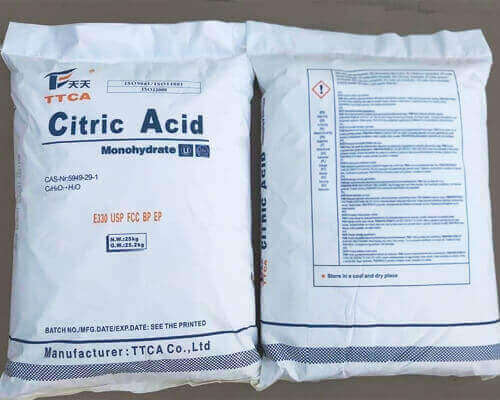
TTCA Citric Acid: Reliable Sour Agent for Mass Food Production

In the world of food processing, challenges show up in every batch. Ingredients need to perform consistently batch after batch to keep suppliers confident and consumers satisfied. From our own manufacturing lines, we know citric acid carries more than a tangy note; it stands as a steady backbone in preservation, pH regulation, and flavor enhancement. Over the decades, we have seen many customers move to citric acid after unsuccessful runs with less stable acids or those prone to causing unexpected shifts in taste and stability. Our own technicians see every day how a dependable sour agent can make or break a launch in beverages, confectionery, dairy, canned foods, and beyond.Direct control over fermentation facilities has taught us that traceability and hygiene aren’t checkboxes—they’re non-negotiables. Quality runs from the precise management of substrates to fully automated finishing and drying. There’s no shortcut because impurities pass into the final flavor or can even show up visually. In soda bottling plants and instant soup factories, it only takes a slight variation in the acid profile to throw off an entire day’s run. The pressure to meet output for global fast-moving consumer goods means one slip could disrupt thousands of shelves. Our teams have refined protocols to lock in both taste and solubility, so manufacturers can focus on innovation rather than troubleshooting sour notes or powder clumping.Every year, food recalls remind the world just how high the stakes are in mass production. Having customers with direct lines to our engineers makes troubleshooting faster. Time and again, vertical integration pays off, reducing contamination risks and allowing lot traceability in minutes instead of hours. Working closely with auditors, we stay up to date on best practices so regulatory challenges in North America or the EU don’t bottleneck a partner’s launch. We have committed substantial investment to water purification, raw material screening, and real-time monitoring to be sure final acid purity meets the needs of major brands and smaller artisans alike.Procurement teams sometimes push for lower-cost acids or new-sounding blends promising improved performance. In practice, raw economic pressures lead to shortcuts in supplier selection. Our lab has run plenty of tests for co-packers who tried to cut costs with non-fermentation-grade acids. Eventually, flavor profiles drift or shelf-life guarantees fail. Consistency becomes unpredictable. TTCA citric acid produced by our process doesn’t just match a spec sheet; it withstands transportation, blending, and long-term storage demands. This reliability becomes visible whenever a multinational shifts production across new geographies—a sour note dead center every time, without callbacks or reformulation cycles.Pressures from consumers around environmental stewardship lead to real changes in our operations. Proper byproduct management and reduced water footprints come from steady investments in equipment and training, not one-off fixes. In food manufacturing, large buyers demand assurances that sour agents don’t just meet taste tests, but that the process reaches a responsible end-to-end environmental standard. Auditors sometimes surprise us; nonetheless, with traceability and records, we keep the doors open for expanded certification and new partnerships. Many colleagues across the industry openly share how adopting these best practices in acid production moved them ahead on bids for companies demanding more than just product cost.From working with food scientists during product development phases to scaling up batches for regional launches, we believe open communication delivers results. Sometimes the best solution for a tricky beverage isn’t in the acid itself but in understanding the system’s total buffering demands or handling properties. Over the years, we’ve adjusted our drying curves and packaging sizes after direct feedback from beverage and snack plants seeking better throughput or lower hygiene risk. We rely on these long-term industrial relationships to keep pace as customer food systems demand ever-tighter tolerances and new sensory profiles. Investing in reliable sour agents like TTCA citric acid streamlines downstream work and shifts attention back where it belongs—creating foods consumers enjoy.

June 24, 2026
Liwei Group Co.,Ltd.

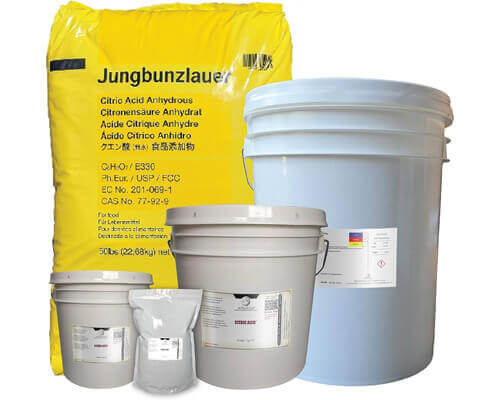
Jungbunzlauer Citric Acid: High-Purity Organic Acid for Premium Pharma Formulation

Staying in the business of chemical manufacturing has laid bare the real meaning of purity and consistency. In the world of pharmaceuticals, those qualities aren't just preferences—they make the difference between products that can be trusted and those that don’t make the cut. At our facility, we keep the focus on every small stage and every bit of housekeeping, because pharma companies are not just customers; they are partners relying on uncompromising purity in the organic acids they select. Citric acid, in particular, faces scrutiny. With Jungbunzlauer’s citric acid, expectations don’t just revolve around a high assay value on a lab report. It means an extended purification process, years of production experience, and real, repeatable process discipline.Turning biocatalysts and fermentation feedstocks into pharma-grade citric acid isn’t a simple recipe of mixing and waiting. It involves round-the-clock oversight, specific controls for temperature and pH, and a sort of industrial intuition you only get after running fermentation tanks through thousands of cycles. We’ve faced setbacks from raw material inconsistencies and responded by tightening procurement practices. Microbial contamination becomes a risk at every step, from inoculation to harvest; we dedicate resources to filtration and sterilizing the entire manufacturing line, beyond what food applications justify. After fermentation, we don’t just filter—the isolation and purification involve dedicated crystallization equipment, ultra-fine filtration, and continuous monitoring for any off-standard behavior in conductivity, odor, or color.Not every batch will behave. Even trace metals like iron, copper, or lead—introduced through raw materials, machinery, or handling—can drag a perfectly good run below pharmacopeial limits. In the past, we learned tough lessons in sorption, piping upgrades, and maintenance schedules, all from a single subpar dissolution test or a customer finding residues where there shouldn’t be any. We’ve also responded to shifting regulatory requirements that force a change to everything from our analytical chemistry to our tank linings. Customers’ quality teams don’t apologize for their vigilance; they conduct site audits, surprise tests, and thorough document reviews. We've built systems for robust traceability, retained critical batch samples for years, and sometimes halted shipments while we revalidate methods or send our own experts to help a client’s trouble-shooting panel.Pharma clients face regulators from the EU, US, China, and beyond, and they demand documentation that extends to nearly every production control. Our in-house labs don’t just check for assay; we invest in the detection of rare impurities, follow up with third-party laboratories, and regularly recalibrate instruments to meet changing compendial standards. GMP is not just a certificate in a binder—it's an ongoing practice. Our workforce must undergo constant training, because a slip in good documentation or instrument calibration can land a product on the wrong side of a regulator’s desk. We keep records so detailed that entire teams can retrace quality events months later. Not so long ago, we navigated a rapid international expansion in our pharma customer base, bringing entirely new requirements in residue limits, allergen management, and bioburden controls.Production volume grows hand-in-hand with responsibility. The pressure to produce more and more citric acid should never come at the expense of quality. To keep up with customers who scale—especially those in markets with seasonality in demand—we designed facilities for modularity, allowing capacity growth without overwhelming quality oversight. Sustainability forms its own challenge; we’re constantly reviewing water use, solvent recovery, and bio-based inputs, thanks to new green chemistry initiatives both internally and from clients. This means rethinking waste valorization, reducing energy in crystallization, and upgrading waste gas cleaning at considerable cost. Years ago, we met strict requirements for solvent residues only after investing in alternative extraction technologies that wouldn’t have passed finance department scrutiny if it weren’t for the clear risk to downstream pharma use. Even among our most experienced operators, there is daily problem solving and close teamwork to maintain both the integrity of the acid itself and the environmental balance in every batch run.Pharma remains one of the most demanding sectors. Direct conversations with formulators, QA directors, and process engineers provide the clearest snapshot of emerging requirements and pain points. We don’t just ship product and wait for feedback; we visit client sites, answer technical questions mid-campaign, and collaborate on improving downstream handling or blending. There’s trust in our name because we’ve handled quite a few urgent requests for custom packaging, batch-specific analysis, and rush shipments in response to market or regulatory disruptions. Time and again, we adapt formulations, segregation protocols, and delivery documentation to fit client-specific validation or import needs. The production floor meets the demands of customers designing everything from sterile solutions and effervescent tablets to skin-care actives, and that stretch forms the backbone of our daily efforts.Years in the industry teach that no process is ever finished. Each new guideline or pharmacopoeia chapter affects everything from raw input sourcing to the calibration schedule in our labs. As pharma products get more advanced, the margin for errors in excipients like citric acid vanishes. To stay in the lead, we keep investing in both process control and staff development. The world’s pharmaceutical industry isn’t getting simpler or smaller—more patients, more therapies, more scrutiny. Upholding the standard in citric acid for these premium formulations requires both humility and confidence: humility to question every batch, every process note, every anomaly, and confidence to stand behind years of delivering not just a product, but the experience, systems, and transparency clients demand.

June 24, 2026

Liwei Group Co.,Ltd.

RZBC Citric Acid: Custom Particle Sizes for Special Manufacturing Process

In our experience, customers in the food, pharmaceutical, and specialty chemical sectors demand more than standard grades of citric acid. Particle size isn’t a footnote; it decides process flow, blending efficiency, dissolution, and—even more than anything else—how consistently the downstream product performs. A major beverage manufacturer once described their difficulty: too-coarse citric acid in the final syrup meant slow dissolution, leading to batch inconsistencies and slower production lines. Fine particles solved powder clumping in instant drink mixes, but excessive dusting from ultra-fine material caused losses and increased housekeeping costs. These pain points don’t show up in lab-scale tests; they’re real on the plant floor and affect actual costs. Silo unloading, pneumatic conveying, mixer design, and dust collection all respond very differently to particle size. In a pharmaceutical granulation line, a slightly wrong fraction changes the flow characteristics and the uniformity of the active pharmaceutical ingredient. The time and money spent working around unsuitable sizing can be substantial. From our perspective, controlling these variables at the manufacturing stage translates not just into compliance, but into solid process predictability for customers down the line.The evolution of customized particle sizing stems from intensive feedback from end-users, not internal brainstorming in the lab. One high-output candy producer approached us with an old problem—citric acid that arrived just a little too fine for their panning equipment. Their operators ran into clogging, and the finished product failed to deliver a consistent tart kick. A change in our crystallization step, followed by post-drying sieving and classification, produced a grade with an average size fine-tuned for that exact use. This wasn’t a one-off. Our engineers have walked the lines in baking plants and pharmaceutical blenders, watching how choice of sieve, airflow settings, and even humidity affect results. The right mesh, whether coarse or ultra-fine, slashes both process inefficiencies and waste. We now keep a record of feedback for every significant customer, shifting our batch size distribution to match their specified needs. Building these relationships means end products that stay reliable, less downtime to clean up dust, and improved yield right out of the bag.Producing citric acid to precise particle sizes doesn’t stop with grinding or using finer mesh screens. The fundamental chemistry and physics at each step—starting with fermentation, downstream purification, crystallization, and drying—play the crucial roles. Fermentation conditions and impurities during crystallization influence not only the purity but also the size and habit of the crystal. Even minor tweaks in temperature and cooling rates—details that seem academic—have had far-reaching consequences in output grades demanded by specific food and pharma processes. A certain granule size cannot always be achieved simply by additional crushing or post-milling; breakage creates fines, which sometimes worsen dusting problems or even threaten occupational safety limits for airborne particulates. Reverse-engineering our methods for customers means changing the very crystallization profile, balancing drying parameters, and only then using careful sieving and blending strategies. Our older, open-tray drying lines were phased out because they lacked the control needed for modern requirements. Now, closed-circuit flows allow measurement and fine-tuning of particle size distribution before bagging. Quality audits enforce this every day—not just on the production floor but in shipping, storage, and at the end-user scale.Large-scale manufacturing rarely tolerates guesswork. One batch out of specification sets off a chain reaction—unused raw materials, rejected runs, and sometimes even forced recalls. We’ve learned that real-world blending, transport, and storage expose every weakness in a specification too vague on particle size. In the world of beverages and candies, slow-dissolving lumps impair dosing control, which in turn creates disputes between operations and quality assurance teams. Major pharmaceutical accounts have delivered real-world data showing inferior tablet hardness or rapid moisture pickup for mismatched particle sizes. Addressing these hurdles demands more than offering just “fine” or “coarse” grades. We invest in high-resolution online particle size analyzers, providing distribution curves that align directly with customer line data. This exchange allows technical teams to match dosing, flow, and stability much more closely than legacy, batch-based methods. Customers also value consistent, reproducible size within each bulk delivery. We credit agile, modern production management for our ability to lock in these narrower specifications over time.Standardization in citric acid manufacturing, especially around particle sizing, has lagged behind the increasingly complex needs of food, beverage, and pharma industries. Regulatory bodies across the globe scrutinize not only chemical composition but also physical performance—which means particle distribution now carries real compliance and liability weight. Recent years have forced us to accelerate investments in process analytics, sieving, and post-processing steps. Instead of labeling only the range (such as “20-40 mesh”), we now certify the full size distribution and routinely collaborate with customers to refine this year over year. The cycle doesn’t end with one shipment: continuous analysis from returned samples, customer site visits, and audits push us to improve even further. We see demand growing for ever-more differentiated grades of citric acid as manufacturing lines get faster and more specialized. Rather than treat particle sizing as an afterthought, we see it as a core value driver. Every step that brings manufacturers peace of mind—fewer jams, smoother mixing, less product lost to dust, more reliable flavor delivery—reflects the depth of experience and collaboration that true manufacturers bring to the table. In day-to-day operations, this focus makes all the difference between a passable raw material and a production partner that shows up for every process challenge.

June 24, 2026

Liwei Group Co.,Ltd.

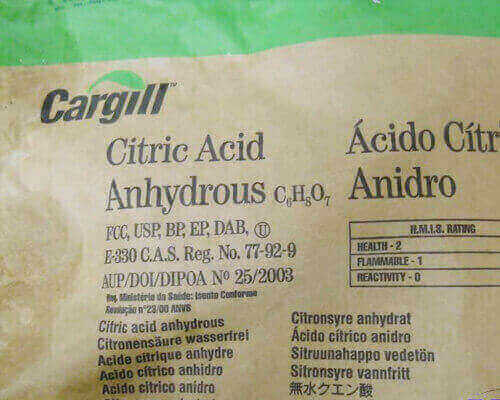
Cargill Citric Acid: Global Compliant Citric Acid for Clean-Label Food

Working every day on the production floor, the shift toward clean-label in food manufacturing feels real and pressing. Over the years, our team watched food brands scramble to remove ingredients that trigger alarm bells for consumers who flip over every package and read every line. The ingredient lists keep getting shorter and simpler. As a direct citric acid producer, not a middleman, we know exactly how much pressure regulations, customer demands, and multinational supply chains put on every pallet that leaves our site. The trend toward clean-label recipes means every raw material, every intermediary, and every finished batch carries a heavy weight of compliance, consistency, and customer trust.Citric acid sits at the core of thousands of processes in our line every single month. Food companies, beverage bottlers, and preservative formulators all count on our output to tenderize meats, preserve shelf-life in beverages, and adjust pH in sauces. Clean-label requirements shape not just marketing but every stage in our operation. Sourcing feedstock means negotiating contracts with agricultural growers who share documentation on their fertilizers, pesticides, and sustainability standards. Every shipment of corn or tapioca is tracked from origin so downstream clients can prove traceability. Our engineers spend late nights balancing yields with the lower-energy fermentation methods that keep the process non-GMO and free from solvents unwanted in clean-label declarations.Dealing with regulations in multiple countries means our documentation on citric acid batches runs longer than the process manuals from two decades ago. Food brands need assurance that our citric acid holds up under scrutiny in the US, the EU, and Asian food authorities—each with differences over allergens, purity standards, or labeling language. Sitting with compliance teams means going granular: tracking which batch qualifies for kosher or halal certification, recording every temperature and pressure reading from the fermenter, and responding when standards bodies want to review fractions of a percent in byproduct detection. The challenge isn’t only hitting international benchmarks, but also keeping up as customers tighten their lists to exclude substances that chemical engineers once never gave a second thought.In the global food ingredients market, the term “clean-label” doesn’t have a single definition. One customer’s non-GMO isn’t enough for another customer who wants yeast-free, gluten-free, or responsibly sourced. Last year, our lab team had to swap out an enzyme after a major snack brand flagged it for not fitting their stricter version of clean-label. We spent months validating new inputs, running pilot batches, and recalibrating QC equipment. That effort paid off; we delivered a lot that helped secure their flagship launch in Latin America. It’s pressure, but also pride: everyone in this plant, from R&D to the pack-out bay, gets that people don’t want to see “mystery chemistry” on their ingredient lists.Supply disruptions exposed a weak point in global ingredient sourcing, prompting more regional food brands to ask where our citric acid really comes from and whether it meets all regulatory tests. Pandemics and logistical hurdles added urgency. Clean-label is not just about the ingredients, but about supply chain transparency. If a batch sat too long in transit or passed through a region with new contaminants, the customer wants answers. We maintain multiple lines using different feedstocks, certified so clients can request organic fermentation or traditional substrates based on what matches both their PR messaging and their governing markets. Keeping these lines running at full capacity demanded more than technical upgrades—it required rethinking how to communicate raw data, batch genealogy, and verification to both auditors and well-prepared brand managers.Audits from multinational food companies go beyond paperwork. Their teams tour our plant, test our environmental and worker safety standards, and dive into our wastewater numbers. Our utility bills, carbon reporting, and even the vendor audit trails are open for inspection. The push for global compliance led us to automate much of our tracking, so each drum of citric acid has a digital fingerprint. This lets downstream partners spot-check everything needed to pass customs, satisfy their own legal teams, and answer to watchdog groups that scrutinize every multinational’s supply chain.Clean-label isn’t just a buzzword on our lab walls. It shapes how machining schedules run, how much redundancy the plant schedules in for unannounced audits, and how our QC teams train their newest hires. The demand drives capital spending for purification equipment, mandates stronger cross-training so operators understand the end uses of every batch, and encourages cross-collaboration even with competitors during standard-setting meetings. Every ton of clean, compliant citric acid that ships builds trust—both with long-standing multinational clients and with emerging food startups who mark their first production run as a make-or-break milestone. The real work of manufacturing never ends, but the sense of shared purpose grows with every new label on supermarket shelves.

June 24, 2026

Liwei Group Co.,Ltd.

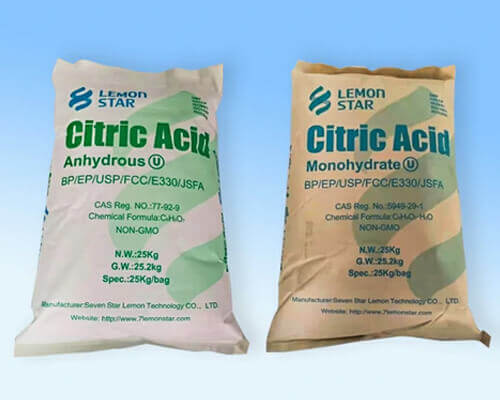
Lemon Star Citric Acid: Flexible Citric Acid Supply for Small & Medium Batches

Many manufacturers in the food, beverage, and personal care sectors ask for support that matches their pace, not hefty procurement rules dictated by giant vendors. As a direct citric acid producer, I often hear how small and mid-sized batch makers get overlooked. Large chemical suppliers lock buyers into rigid contracts or minimums, yet countless innovation stories start with modest runs. It is clear that batch size limits slow progress, whether you are trialing new drinks, crafting seasonal condiments, or testing a new bath bomb recipe. We take a different path. We produce Lemon Star Citric Acid right on our lines, made to match the planner’s schedule, not just ours. This flexibility allows our partners to lower warehouse overhead and slash the risk of sitting on surplus that loses value or shelf life.Citric acid sits at the center of so many products—drinks, jams, cleaners, shampoos, even pet treats. We know a missed shipment or a subpar batch doesn’t just inconvenience clients, it jeopardizes brands. Several years ago, we invested heavily in line upgrades to smooth changeovers between small and medium batch runs. This means your order rolls out with the same care and process control as a truckload going to a high-volume plant. We track lot numbers, test purity, and manage traceability because every kilo should perform as expected, whether it weighs a pallet or a handful of boxes. If a customer calls with an urgent change or a new spec, our quality and production teams respond in real time and tweak process parameters quickly.On the plant floor, bottlenecks rarely happen in the lab—they happen in supply. The world learned during global material shortages that it pays to have stable relationships with original producers. If you call us for five metric tons for a short fruit juice run or a single-metric ton for a fast-moving cleaning product, you speak directly to the people who make it, not a chain of middlemen passing the buck. We control raw ingredient sourcing, blend control, packaging, and transport. As a chemical manufacturer, it translates into fast adjustments and fewer stockouts. Across the board, smaller businesses and contract production facilities get real pricing and lead-time transparency—no surprises, no pile-on fees because your batch isn’t “big enough.” Producers pivot more rapidly when they take only what they can use. Bulk-driven supply chains leave small-scale manufacturers sitting on capital, holding months of citric acid just to keep their lines running. Smaller and medium batch options mean you can run lean production cycles and spend less up front. This slashes waste, especially for craft ingredients that might be sensitive to moisture or degradation. Our hands-on approach also means less red tape for certifications, audit assistance, and documentation for organic, Halal, or Kosher needs—our team covers these audits regularly, so smaller manufacturers spend their resources where it counts.We have seen craft beverage upstarts become household names. We have watched personal care brands adapt to viral trends in weeks, not months, because they could buy only what they needed to prove a new citric acid application. Being a manufacturer with our own plant, staff, and sourcing partners lets us advise customers straight from the production line. Clients from small confectioners to new cleaning product makers ask for practical solutions—immediate test batch deliveries, unique granulation needs, or specialty packaging sizes that most overseas traders won’t entertain without a hefty surcharge. As producers, we see success stories that start on our order pad and land on retail shelves, not in marketing slides. We built Lemon Star around direct access and practical supply options because reliable service supports the people driving industry shifts. Whether scaling for growth or holding steady through a seasonal run, our lines operate with your schedule in mind. Our factory staff answer calls and emails because they know what happens to a filling line that halts over a late delivery or a formulation error. We spend time listening to the manufacturing community and adapt our production schedules, not just for volume but for the shifting needs of downstream partners. Reliable, flexible citric acid supply isn’t just a business strategy for us. It reflects an understanding of how smaller producers shape the market with ideas and products that demand more than standard order forms.

June 24, 2026

Liwei Group Co.,Ltd.

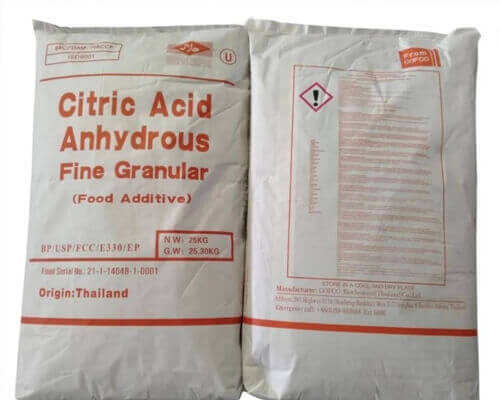
COFCO Citric Acid: Stable Bulk Citric Acid Supported by Large Production Capacity

In the world of food and beverage, citric acid remains a workhorse ingredient—nobody in this business can afford bottlenecks. Speaking from the daily operation of manufacturing facilities, grinding and fermenting bulk quantities has always been about much more than simply filling tanks or pushing out bags to meet orders. Stability comes from a production line built on scale and tight controls. Every kilogram produced must meet strict expectations, not just for regulatory compliance, but also for customers who have built their processes around a particular standard. Without dependable capacity, supply chains start to echo with doubt. Clients want security—they want to know their next order is ready before asking. Running large citric acid plants, we’ve learned that scale allows more frequent checks, better batch-to-batch consistency, and the ability to weather swings in both demand and raw material prices. Agricultural inputs, energy costs, and international shipping can change without warning. Facilities with large volumes have greater resilience against these shocks. For instance, excess fermentation capacity lets us smooth out harvest fluctuations; centralized warehousing can buffer raw material shortages. Downstream, major buyers often require delivery assurances six or twelve months ahead, yet smaller outfits regularly find themselves stretched by even modest increases in volume. Over decades of handling COFCO citric acid production, it’s proven that robust capacity keeps everyone on schedule: drinks, candies, pharmaceuticals, and cleaners all flow so long as the base ingredient keeps moving. If any one node falters, the effects ripple across entire regions and sectors, impacting pricing and product launches. Size brings not only efficiency but a cushion against such calculation errors.Manufacturers who operate at scale help support supply chain innovation. Customers explore new applications or formulations; sometimes they ask for tighter particle distribution, sometimes for low-moisture powders. With access to large production lots and in-house technical teams, manufacturers can collaborate on tailored blends and specialty preparations without affecting reliability. This direct partnership enables clients to trial new concepts or grow into new markets—without being turned away due to capacity limits. R&D requires flexibility but also the commitment embedded in robust infrastructure. From years spent investing in plant upgrades and process automation, I’ve seen these investments reduce error rates and create room for bold moves no small operation can attempt. Operating massive facilities brings responsibilities that cannot be evaded. With high output, small process deviations turn into real risks—either for the people in the plant or for the communities around us. That’s why industrial-scale citric acid production integrates environmental controls and traceability from the start. Experienced crews monitor air and water discharge; materials are recycled or treated well before leaving the property. Because customers increasingly care about sustainability—especially international buyers—transparent reporting and continuous upgrades shape the entire approach. Inspections and audits are viewed as partnership opportunities. By producing at scale, the ability to embrace new emissions standards or product certifications becomes an advantage and not a stumbling block. Over time, this strengthens not just one brand, but the credibility of the entire marketplace.One of the quiet truths about scaling up citric acid is that it supports both the biggest multinational names and the smallest makers. Nobody wants to hear that production is paused to prioritize a larger order, nor do large users want to worry about stock being siphoned off for spot deals. Stability comes from balancing contracts, servicing regular flows while keeping emergency reserves. High-efficiency logistics networks, rail spurs, and dedicated delivery fleets become possible at large scale, which means far fewer interruptions for everyone down the chain. Direct manufacturing ties foster understanding on both sides. A customer’s feedback about a sticky batch or a delayed truck isn’t lost in an email chain—the buck stops with the actual team that produced it, and it’s our direct responsibility to solve the issue. Any significant supplier must navigate national and international regulations for food additives, pharmaceuticals, and environmental discharge. Regulatory changes can bring pain, especially if supply sources scatter across regions with differing rules. Running a consolidated, high-capacity site allows easier adaptation to shifting standards—frequent audits translate into confidence, and batch records become a shield against recalls or import refusals. Experience in this arena is earned: years of updating lines, validating assays, and prepping for unannounced inspections so finished shipments cross borders without hold-ups. Customers benefit directly from this consistency, as delays upstream rarely intrude into their workflows. Large-scale production supports the due diligence that modern commerce requires.A bulk citric acid manufacturer takes the long view. Unstable energy markets, changing crop yields, and swings in buyer tastes may shift the ground, but those who keep capacity ahead of demand are capable of absorbing surprises. Regular plant upgrades, from yield-improved fermentation strains to smarter packing automation, ensure output keeps pace with world needs. Customers come back not out of habit but out of trust—trust built from days and nights spent maintaining lines, troubleshooting, and building buffers against outages or price spikes. Innovation and safety walk hand in hand when volume and commitment intertwine.

June 24, 2026